On having a company office
We had two offices during Portrait, both in Badhoevedorp, right next to Amsterdam Schiphol. Practically Amsterdam.
An office is a useful tool if you know what you are doing but need to build together. It is a bad tool for figuring out what to build next.
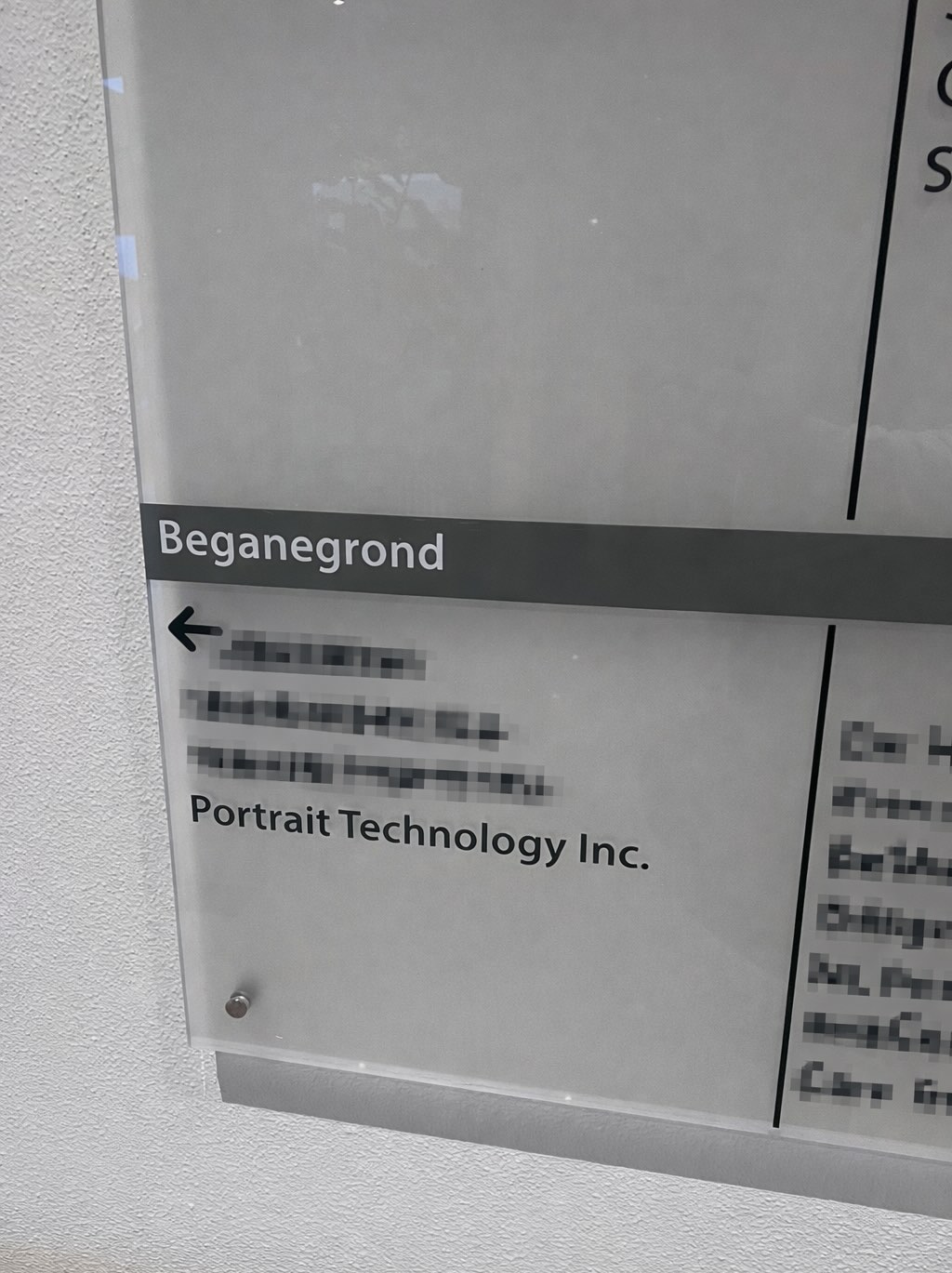
our first office
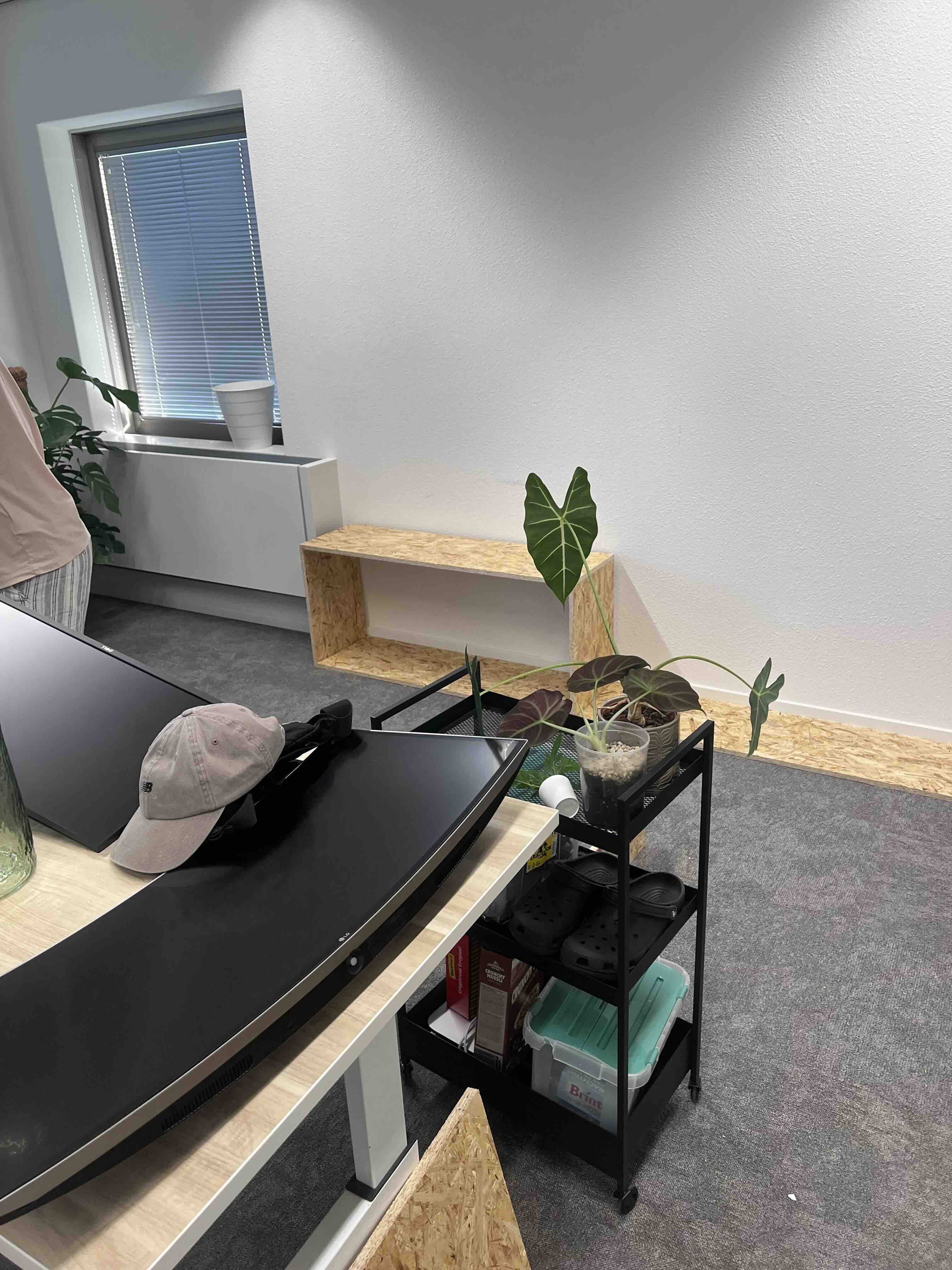
work in progress: day 1
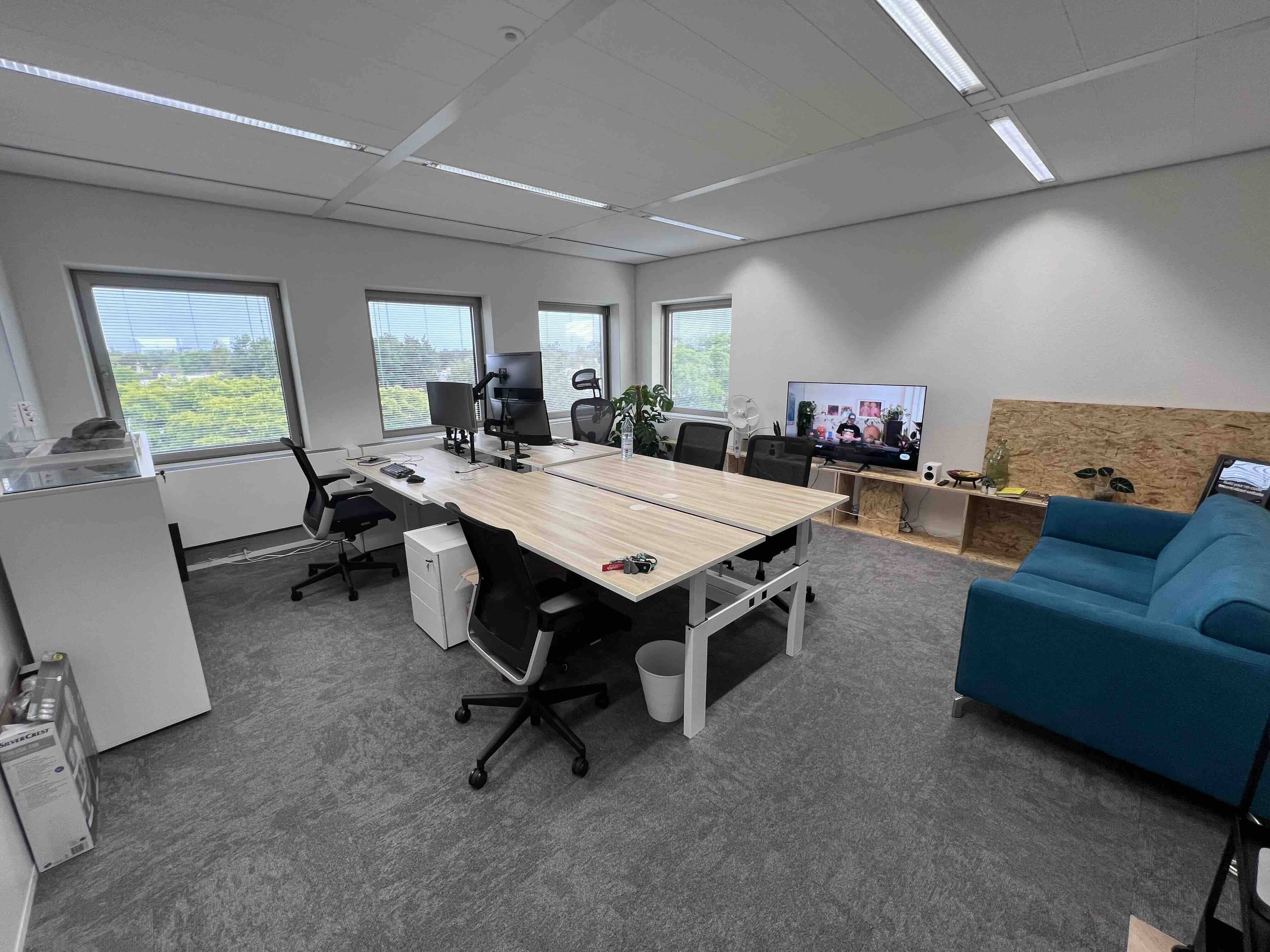
our second office
The good
- Debugging and collaboration. I handled the protocol, product, and backend; my co-founder focused on frontend and design. When those layers needed to connect, working side by side removed friction. In this stack, errors are often opaque—signatures, hashes, unreadable outputs—so the frontend would hit issues I had already solved or could immediately diagnose.
- Deep focus without the interruptions of home life. This point might seem contradictory with the later points, but it is not. If you are in the zone and you have a clear direction or deadline, the office is a great place to be. It is not a great place to find the direction or set the deadline, but once those things are in place, it is a good place to execute on them.
- War rooms during launches. When something big was happening, you do want to be in the same place. If something is on fire, you want to be able to point at the same screen and say, "What the hell is going on here?" you don’t want to be on a call where everyone is describing what they see in their own logs. You want to be looking at the same thing and talking about it together without writing a message or sharing a screen.
The bad
- An office is a bad environment for creative problem solving. It is good for locking in and doing the dirty work. It is not good for deciding what the dirty work should be. The worst product decisions we made happened at the office. The best ones happened anywhere I wasn’t tense—walking in the woods, taking a shower, sitting on the balcony with my bonsai trees, staring into my cichlid aquarium. The office is a place to execute, not a place to think.
- The office is a social environment. That is not bad in itself, but it is a different mode of being. It is not the mode I want to be in when I am trying to solve hard problems. It is the mode I want to be in when I am trying to execute on decisions I have already made, which frankly is not a state startups are in most of the time when they are still trying to find product-market fit.
- Morning commute. The best thing you can do as a founder is start working the moment you open your eyes. To many this sounds unhealthy. People talk about routines—sit in the sun for fifteen minutes, meditate for five, journal for ten. But when I wake up, I am energized, and any distraction takes energy away. Driving an hour to work, greeting people, socializing while grabbing coffee. It is all a drain on the most productive part of the day.
- Evening commute. I do light work in the evening—emails, Slack, Telegram, X, market research, inspiration. I don’t even consider that work as it helps me wind down. But it takes roughly the same time and energy as commuting home from the office. That is a lot of wasted time and energy every day.