Portrait Wallet for iOS
Portrait Wallet for iOS makes stablecoins feel like normal money on an iPhone instead of a crypto dashboard. Think Revolut, Venmo or Cash App, but for self-custodial stablecoins across twelve chains.
The product direction was simple: dollars first, usernames instead of addresses, and chain logic pushed into the background where regular people never have to think about it.
Dollars first
The app was not trying to teach people token symbols or network maps. The interface should read like money: a dollar balance, a send flow, a card, and savings. The crypto implementation details could exist underneath without becoming the product.
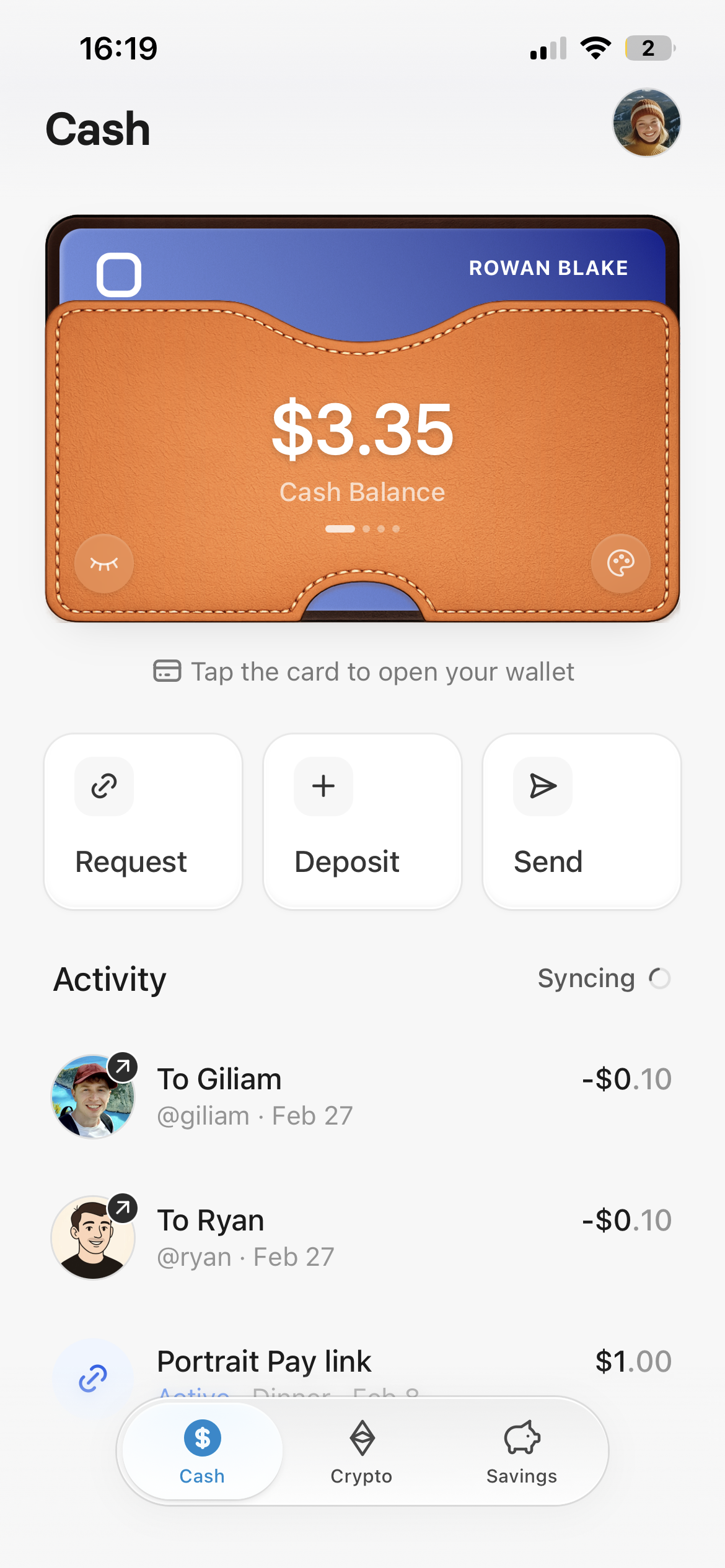
Portrait reads USDC, USDT, USDT0, and DAI across twelve networks, converts them to dollars, and sums them into one spendable number. Stablecoins should read as dollars. Chains and tickers are implementation details.
Money is social
Every meaningful transaction has a person on the other end. Splitting rent, paying back a friend, sending a gift. Money already moves through social context. The product should acknowledge that instead of pretending every transfer is just address-to-address infrastructure.
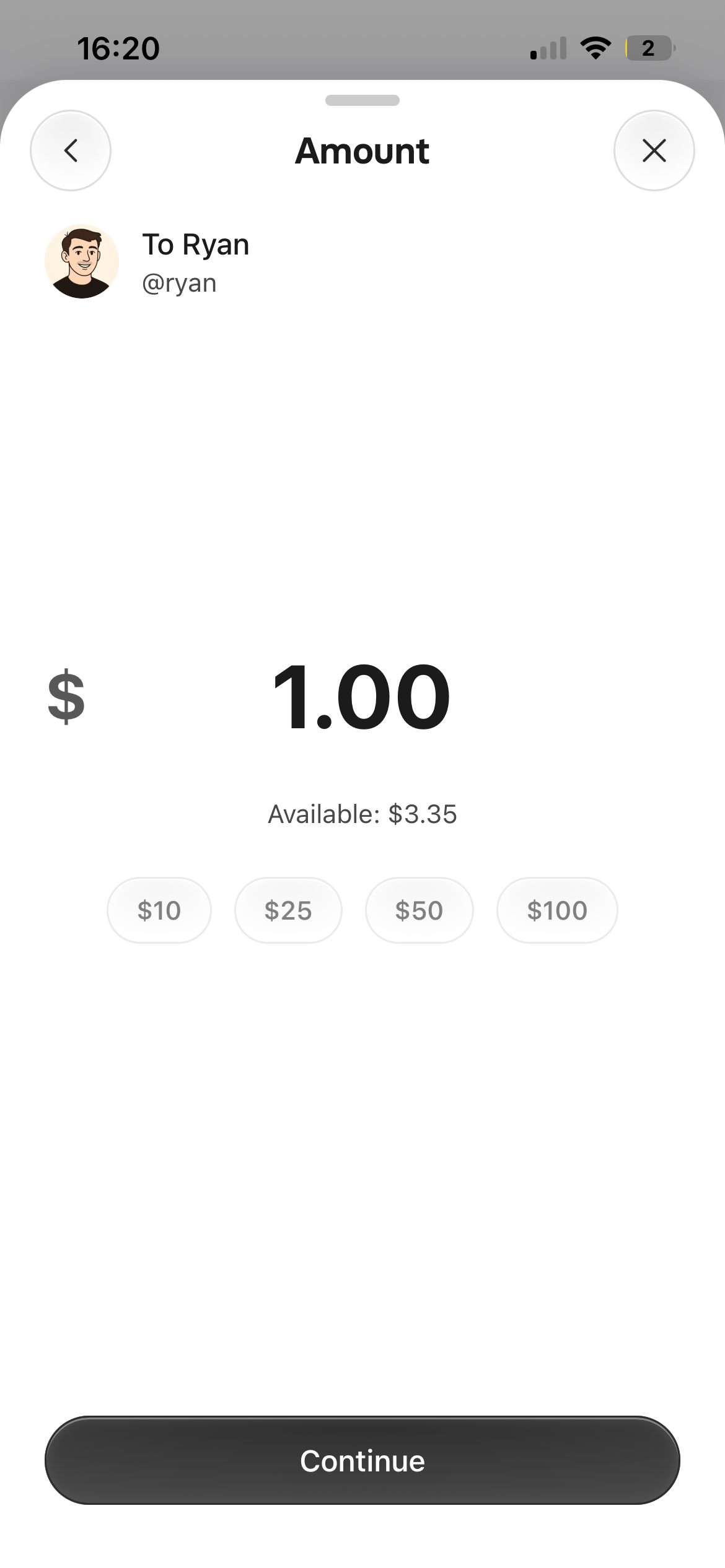
You do not need to build a social network to make a wallet social. You need identity. A Portrait username is enough. Send to @usernames, receive through a profile, and let the transaction history read like a record between people instead of an anonymous ledger.
Send, spend, save
Sending is a dollar amount plus a username. Smart Send scores routes by gas, bridge fees, and speed, then chooses the cheapest combination across twelve chains and includes gas for the recipient. The user sees a direct transfer and gets a reliable result.
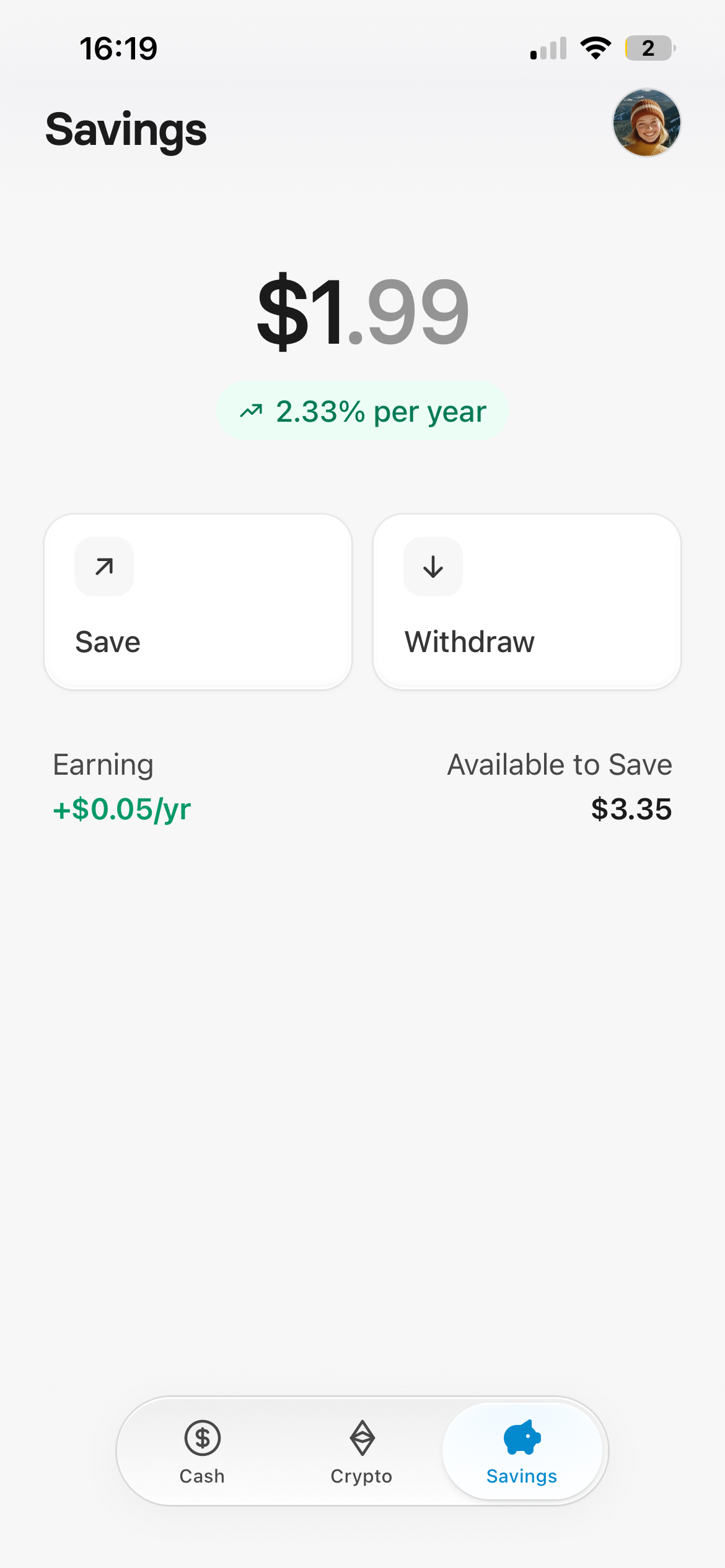
The same abstraction extends to spending and savings. Add money to the card and the wallet bridges stablecoins to Gnosis Chain and loads a Gnosis Pay Safe. Move money to savings and it goes into Aave. The flows are different under the hood, but the interface stays consistent.
Native iOS matters
Browser wallets serve traders. Phone wallets serve everyone else. The people who benefit most from self-custodial money are not installing MetaMask. They are on their phones and expect something closer to Venmo or Cash App.
A wallet on iPhone should feel like an iPhone app, not a browser-shaped crypto tool pasted into a phone. Keys live in the Secure Enclave, approvals use Face ID, and the visual language has to feel trustworthy before the user understands any of the infrastructure.
The point
The point of Portrait Wallet was not novelty. It was to make holding, sending, spending, and saving stablecoins feel obvious enough that the user could stop thinking about crypto and just use the product.
Do not build a social product and hope people bring their money. Build a money product and let the social dynamics emerge from how people actually use it.